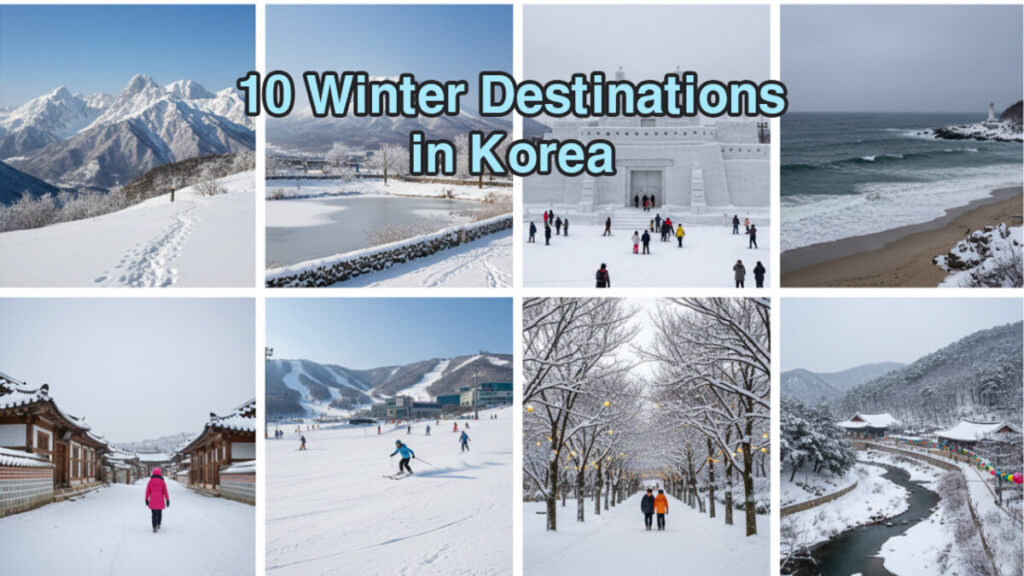
Korea’s Top 10 Winter Destinations: Experiencing Winter Vibes Properly
When chilly winds start to blow, warm interiors or snow-covered landscapes naturally come to mind. If you’re wondering where to go this winter, this article will be the perfect guide. We’ve carefully selected the top 10 destinations to properly enjoy Korea’s beautiful winter. From attractive features of each destination to convenient transportation information and diverse activities you’ll regret missing, we’ll tell you everything in detail.
1. Pyeongchang, Gangwon-do: Mecca of Snow Flowers and Winter Festivals
Location: Pyeongchang-gun, Gangwon-do, South Korea
Transportation:
- KTX: About 1 hour 30 minutes from Cheongnyangni Station or Seoul Station to Pyeongchang Station. Use city bus or taxi from Pyeongchang Station.
- Bus: About 2 hours 20 minutes from Dong Seoul Terminal to Pyeongchang Intercity Bus Terminal.
- Private Car: Use Yeongdong Expressway, exit at Jinbu IC or Pyeongchang IC.
Detailed Description: Pyeongchang is the optimal place to enjoy winter’s beauty, worthy of being called ‘the land of snow and ice.’ It’s a place full of vast snowfields, clean air, and winter festival excitement. Especially the winter scenery of Daegwallyeong Sheep Ranch is beautiful like a picture postcard. The experience of walking on hills covered with white snow presents unforgettable memories.
Activities:
- Pyeongchang Trout/Ice Fish Festival: A representative winter festival held every winter. You can enjoy various experiences like ice fishing, sledding, and bare-hand catching. (Must confirm timing)
- Skiing & Snowboarding: You can enjoy winter sports at Korea’s top-level ski resorts like Yongpyong Resort and Alpensia Resort.
- Daegwallyeong Sheep Ranch: You can stroll while appreciating the exotic scenery of the ranch covered with white snow, or have time interacting with sheep in warm indoors.
- Woljeongsa Fir Tree Forest Path: Walking the snow-covered fir tree forest path presents mysterious experiences as if entering a fairy tale.
Additional Information:
- Peak Winter Season: Late December to early February for best snow conditions
- 2018 Winter Olympics Legacy: Visit Olympic venues including ski jump towers and Olympic Stadium – some offer year-round activities and museums
- Budget Skiing: Weekday ski passes are 30-40% cheaper than weekends; rent equipment in town rather than on-mountain for savings
- Local Food: Try buckwheat dishes (memil mandu, memil jeonbyeong) and mountain vegetable bibimbap
- Accommodation Tips: Book ski resort condos 2-3 months in advance; nearby pensions in Hoenggye offer more affordable options
- Photography Spots: Sunrise at Sheep Ranch offers stunning mountain backdrop with morning mist
- Temperature: Average -10°C to -5°C; dress in layers with thermal underwear essential
- Ski Resort Comparison: Yongpyong has longest runs (5.6km), Alpensia better for beginners, Phoenix Park most family-friendly
2. Gangneung, Gangwon-do: Harmony of East Sea and Snow Scenery
Location: Gangneung-si, Gangwon-do, South Korea
Transportation:
- KTX: About 1 hour 40 minutes from Seoul Station to Gangneung Station. Use city bus or taxi from Gangneung Station.
- Bus: About 2 hours 40 minutes from Dong Seoul Terminal to Gangneung Intercity Bus Terminal.
- Private Car: Use Yeongdong Expressway, exit at Gangneung IC.
Detailed Description: Gangneung, where blue East Sea and white snow blend, is an attractive destination even in winter. Walking the beach receiving cold sea breezes is good, and appreciating snow scenery around Gyeongpo Lake is also tasteful. Also, you can feel serene winter atmosphere at historical places like Ojukheon or Seongyojang.
Activities:
- Gyeongpo Beach & Jeongdongjin: Walking the beach feeling winter sea romance, or appreciating New Year’s first sunrise at Jeongdongjin, famous as a sunrise spot, is also a special experience.
- Ojukheon & Seongyojang: Feel serene winter atmosphere at these places preserving the beauty of Joseon Dynasty yangban (aristocrat) houses.
- Anmok Beach Coffee Street: You can spend leisurely time appreciating the sea with a warm cup of coffee even in cold weather.
- Daegwallyeong Snow Flower Festival (Confirm timing): As a winter festival center along with Pyeongchang, you can enjoy various snow sculptures and winter activities.
Additional Information:
- Winter Seafood: Peak season for fresh squid, crab, and halibut – try hoe (raw fish) at Jungang Market at 40-50% lower prices than Seoul
- Coffee Culture: Gangneung has over 300 specialty coffee shops; take a coffee tour visiting roasteries
- Sunrise Times: January sunrise around 7:40 AM at Jeongdongjin – arrive 30 minutes early for best spots
- BTS Filming Locations: Several K-drama locations including “Goblin” and “Guardian: The Lonely and Great God”
- Gyeongpo Lake Ice Festival: Late January to early February features ice sculptures and winter sports (confirm dates annually)
- Budget Accommodation: Homestays and guesthouses in downtown Gangneung offer affordable options (30,000-50,000 KRW per night)
- Free Activities: Walking Gyeongpo coastal path, visiting Seongyojang (traditional house with minimal entrance fee)
- Transportation Tip: Rent bicycles near Gyeongpo Lake to tour multiple beaches efficiently
3. Sokcho, Gangwon-do: Winter Seasonal Seafood and Seoraksan’s Majesty
Location: Sokcho-si, Gangwon-do, South Korea
Transportation:
- KTX: Seoul Station to Sokcho Station (scheduled to open; currently move from Cheongnyangni Station to Gangneung Station then transfer to bus).
- Bus: About 2 hours 40 minutes from Dong Seoul Terminal to Sokcho Intercity Bus Terminal.
- Private Car: Use Yeongdong Expressway and East Coast Expressway, exit at Sokcho IC.
Detailed Description: Winter Sokcho is also excellent as a gourmet travel destination where you can taste fresh seasonal seafood. You can taste fresh raw fish, snow crab, and king crab at affordable prices, and Seoraksan’s majestic winter scenery provides another attraction. Taking the cable car up to Gwongeumseong allows you to appreciate panoramic views of snow-covered mountain ranges.
Activities:
- Seoraksan National Park: You can enjoy hiking or cable car rides while appreciating Seoraksan’s magnificent scenery covered with snow flowers.
- Sokcho Tourist & Fishery Market: A vibrant market where you can taste and purchase various foods like fresh live fish, seafood, and dried fish.
- Abai Village & Gaetbae: You can have special experiences riding the gaetbae (rope ferry) and tasting North Korean food at Abai Village, which was a displaced persons’ settlement.
- Dongmyeong Port: A port where you can taste fresh winter seafood, with many restaurants where you can taste fresh seafood on the spot.
Additional Information:
- Snow Crab Season: December to March is peak season – expect to pay 60,000-100,000 KRW per kg at markets
- Cable Car Winter Hours: Reduced operating hours (9 AM – 5 PM); arrive early as long queues form by 10 AM
- Seoraksan Winter Hiking: Ulsanbawi Rock trail remains open but requires crampons; rent at park entrance for 5,000 KRW
- Abai Sundae: Don’t miss this North Korean-style blood sausage specialty – Abai Village has the most authentic versions
- Budget Tip: Buy live seafood at market and have it prepared at nearby restaurants for minimal cooking fees (5,000-10,000 KRW)
- Accommodation: Book Sokcho hotels with sea views 1-2 months ahead; motels near bus terminal are budget-friendly (40,000-60,000 KRW)
- Photography: Early morning at Abai Village with fishing boats and sunrise over the harbor
- Winter Festival: Seoraksan Snow Festival (late January) features ice sculptures and traditional performances
4. Jecheon, Chungcheongbuk-do: Winter Lakes and Healing Travel
Location: Jecheon-si, Chungcheongbuk-do, South Korea
Transportation:
- KTX: About 1 hour 10 minutes from Cheongnyangni Station to Jecheon Station.
- Bus: About 1 hour 50 minutes from Dong Seoul Terminal to Jecheon Intercity Bus Terminal.
- Private Car: Use Jungbu Inland Expressway, exit at Jecheon IC.
Detailed Description: Jecheon holds beautiful lakes like Uirimji and Cheongpung Lake, boasting serene scenery even in winter. Especially experiences enjoyed on frozen lakes in winter present special memories. Also, Jecheon is called ‘the land of medicinal herbs,’ with many healthy foods and healing places, making it good for healing body and mind.
Activities:
- Uirimji: One of Korea’s three major reservoirs, in winter you can walk on the frozen reservoir or enjoy ice fishing.
- Cheongpung Lake Cable Car: You can capture Cheongpung Lake’s beautiful winter scenery at a glance. Boasting open views, on clear days you can view mountain ranges in the distance.
- Jecheon 10 Scenic Spots (Bat Rock, Doraksan, etc.): You can appreciate beautiful natural landscapes while enjoying winter mountain hiking.
- Medicinal Herb Food Experience: You can nourish your body tasting healthy food using medicinal herbs, Jecheon’s specialty.
Additional Information:
- Jecheon International Music Film Festival: If visiting in August, catch Korea’s unique music-themed film festival
- Healing Temple Stay: Nearby Silsangsa Temple offers winter temple stay programs with meditation and temple food (80,000-100,000 KRW for 1 night)
- Ice Fishing: Uirimji allows ice fishing January-February when ice thickness reaches 15cm+ (equipment rental available, 10,000 KRW)
- Cable Car Tips: Round-trip takes 40 minutes including observation time; sunset rides offer spectacular views
- Medicinal Herb Market: Jecheon Yakryeong Market specializes in ginseng, deer antler, and traditional Korean medicine ingredients
- Local Cuisine: Try dakgalbi (spicy stir-fried chicken) – Jecheon’s version uses medicinal herbs for unique flavor
- Budget Accommodation: Lakeside pensions around Cheongpung Lake offer off-season discounts (50,000-80,000 KRW per room)
- Family Activities: Winter sledding at Cheongpung Lake Lakeside Park, indoor herb spa facilities
5. Muju, Jeollabuk-do: Meeting of Deogyusan’s Snow Flowers and Skiing
Location: Muju-gun, Jeollabuk-do, South Korea
Transportation:
- Bus: About 3 hours 30 minutes from Dong Seoul Terminal to Muju Public Bus Terminal.
- Private Car: Use Tongyeong-Daejeon Expressway, exit at Muju IC.
Detailed Description: Muju is the optimal place for enjoying winter sports with Deogyusan famous for winter snow flowers and Korea’s top-level ski resort. Especially Deogyusan’s ice-covered trees and snow flowers present great impressions to hikers, and using the gondola allows anyone to easily ascend near the peak to appreciate beautiful snow scenery.
Activities:
- Deogyusan National Park (Gondola): Deogyusan’s snow scenery in winter is truly spectacular. The experience of taking the gondola up, getting off at Seolcheonbong, and walking along ridges covered with white snow will be unforgettable.
- Muju Deogyusan Resort: You can enjoy winter sports at a ski resort with wide slopes and courses of various difficulty levels.
- Bandiland: Equipped with an astronomical observatory and firefly research center, providing beneficial experiences for family travelers. (Confirm winter operating hours)
Additional Information:
- Gondola Operation: Longest gondola in Korea (6.1km, 30 minutes one-way) – operates 9 AM – 5 PM in winter
- Ice-Covered Trees (Sanggoдаe): Best viewing late January to early February; temperatures must drop below -10°C with humidity
- Ski Resort Details: 31 slopes, 10 lifts; night skiing available until 11 PM on weekends
- Hiking Precautions: Winter summit hikes require crampons, warm gear, and physical fitness – not recommended for beginners
- Package Deals: Resort ski + accommodation packages often better value than separate bookings
- Local Food: After skiing, try Muju’s famous firefly rice wine and red chili pepper bulgogi
- Hot Springs: Deogyusan Resort and nearby hotels offer hot spring facilities – perfect for post-skiing relaxation
- Budget Tip: Lift tickets 30% cheaper on weekdays; rent equipment in Muju town before entering resort
- Family Zone: Beginner slopes and kids’ park with snow play area
- Temperature: Summit temperatures can drop to -20°C; valley areas around -5°C
6. Damyang, Jeollanam-do: Green Bamboo Forest and Southern Province Flavors Even in Winter
Location: Damyang-gun, Jeollanam-do, South Korea
Transportation:
- KTX: About 2 hours 30 minutes from Seoul Yongsan Station to Gwangju Songjeong Station. Transfer to bus from Gwangju Songjeong Station to Damyang Intercity Bus Terminal (about 30 minutes).
- Bus: About 3 hours 40 minutes from Seoul Central City Terminal to Damyang Public Bus Terminal.
- Private Car: Use Honam Expressway, pass through Gochang JC to Damyang JCT and exit at Damyang IC.
Detailed Description: Damyang is famous for bamboo forests that don’t lose their greenness even in winter. Juknokwon’s quiet and mysterious atmosphere leaves deep impressions on visitors even in winter. Also, it’s attractive as a gourmet travel destination where you can taste abundant southern province winter delicacies.
Activities:
- Juknokwon: Juknokwon with millions of densely planted bamboo trees boasts green vitality even in winter. Walking bamboo forest paths breathing cold winter air presents special healing.
- Metasequoia-lined Road: In winter, tree branches shed their leaves and become bare, but present different charms in themselves. Good for walking or bicycling.
- Damyang Tteokgalbi & Hanjeongsik: Taste Damyang’s representative foods where you can properly feel southern province flavors.
- Damyang Lake & Gwanbangjerim: You can spend leisurely time walking calm winter lake scenery and serene forest paths.
Additional Information:
- Juknokwon Paths: Eight themed courses (10 minutes to 1 hour each) through 2.4km of bamboo forest
- Winter Advantages: Fewer crowds than spring/fall; crisp air enhances bamboo forest experience
- Bamboo Crafts: Purchase traditional bamboo products, utensils, and decorative items at Juknokwon Cultural Center
- Tteokgalbi Tradition: Damyang invented this dish – try at traditional restaurants like Damyang Tteokgalbi Gongwon
- Metasequoia Road: 8.5km tree-lined road particularly photogenic in winter with bare branches creating cathedral-like canopy
- Gwangju Proximity: Combine with Gwangju city visit (30 minutes away) for art museums and democratic history sites
- Budget Meals: Hanjeongsik (Korean table d’hôte) at local restaurants offers 10+ side dishes for 15,000-20,000 KRW
- Accommodation: Traditional hanok stays available in Damyang for cultural immersion (60,000-100,000 KRW)
- Winter Festival: Damyang Bamboo Festival sometimes includes winter events – check local calendar
7. Gyeongju, Gyeongsangbuk-do: Thousand-Year Capital’s Winter Story
Location: Gyeongju-si, Gyeongsangbuk-do, South Korea
Transportation:
- KTX: About 2 hours from Seoul Station to Singyeongju Station. Use city bus or taxi from Singyeongju Station.
- Bus: About 3 hours 30 minutes from Dong Seoul Terminal to Gyeongju Intercity Bus Terminal.
- Private Car: Use Gyeongbu Expressway, exit at Gyeongju IC.
Detailed Description: Gyeongju is beautiful in all four seasons, but in winter historical sites blend with snow to create more mysterious and serene atmospheres. Winter when not crowded is good for leisurely exploring sites feeling the thousand-year capital’s breath.
Activities:
- Bulguksa & Seokguram: Snow-covered Bulguksa scenery is like a picture. Feel the harmony of history and nature at this UNESCO World Cultural Heritage site.
- Cheomseongdae & Donggung Palace and Wolji Pond (former Anapji): Snow-covered Cheomseongdae presents unique scenery, and night views of illuminated Donggung Palace and Wolji Pond add winter night romance.
- Daereungwon (Cheonmachong): Walking among snow-covered tomb mounds, you can feel Silla Dynasty kings’ breath.
- Hwangnidan-gil: You can enjoy winter snacks while browsing cute cafés and accessory shops in alleys where modern sensibility and tradition blend.
Additional Information:
- Winter Illumination: Donggung Palace and Wolji Pond illuminated until 10 PM – winter lighting creates magical reflections
- Fewer Crowds: December-February visitor numbers drop 50-60% from peak seasons – enjoy peaceful site visits
- Gyeongju Bread: Winter specialty – warm Hwangnam bread (sweet red bean pastry) perfect for cold weather snacking
- Temple Stay: Bulguksa offers winter temple stay programs with snow scenery meditation sessions
- Bicycle Rental: Even in winter, bicycles available near Gyeongju Station (heated bike seats available)
- Tumuli Park at Night: Some royal tombs illuminated in winter creating ethereal atmosphere
- Museum Visits: Gyeongju National Museum free admission – excellent indoor winter activity
- Budget Tip: Multi-site pass covers Bulguksa, Seokguram, and more for discounted admission
- Hanbok Rental: Winter hanbok (with warm layers) available for 20,000-30,000 KRW – popular for photos in snow
- Local Delicacy: Try Gyeongju’s ssambap (rice wraps) and chalboribbang (barley bread)
8. Jeju Island: Warm Southern Country’s Charm Even in Winter
Location: Jeju Special Self-Governing Province, South Korea
Transportation:
- Air: Operates from major airports nationwide including Gimpo, Gimhae, and Daegu to Jeju International Airport.
- Ship: Operates from Mokpo, Wando, Yeosu, etc., to Jeju Port.
Detailed Description: Jeju Island, where you can spend Korea’s warmest winter, provides beautiful scenery and various activities even in winter. From blue seas and oreums (volcanic cones) to flowers blooming only in winter, Jeju’s winter presents diverse charms.
Activities:
- Hallasan Mountain: Snow-covered Hallasan’s snow scenery is magnificent. Thorough preparation and safety rule compliance are essential when climbing. (Seongpanak, Gwaneumsa courses, etc.)
- Beach Drives & Cafés: You can enjoy drives along beautiful beaches like Hyeopjae, Woljeongri, and Hamdeok, or enjoy leisure at warm cafés with sea views.
- Camellia Hill & Hueree Natural Life Park: You can walk beautiful gardens appreciating camellia flowers blooming in full in winter.
- Tangerine Picking Experience: In winter Jeju, you can experience picking tangerines directly, good for families with children.
- Oreum Exploration: Climbing relatively gentle oreums to view Jeju’s winter scenery is also good. (Saebyeol Oreum, Yongnuni Oreum, etc.)
Additional Information:
- Temperature: Mild 5-10°C compared to mainland Korea’s -10°C; warmest Korean winter destination
- Tangerine Season: Peak December-February – farm visits 10,000 KRW per kg, all-you-can-eat while picking
- Camellia Blooms: Peak December-March at Camellia Hill – over 6,000 camellia trees in 500+ varieties
- Winter Hiking: Hallasan requires crampons December-March; summit trails often close due to weather
- Off-Season Benefits: Hotel prices drop 40-50%, fewer tourists, easier restaurant reservations
- Winter Activities: Horse riding at beaches, green tea picking (winter harvest), black pork hotpot
- Seongsan Ilchulbong: UNESCO crater less crowded in winter – sunrise at 7:30 AM spectacular
- Budget Accommodation: Guesthouses and Airbnbs abundant at 30,000-50,000 KRW per night
- Rental Car Essential: Public transportation limited in winter; book cars in advance for better rates
- Local Winter Food: Try jeonbokjuk (abalone porridge), haemul jeongol (seafood hotpot), and fresh raw fish
- Weather Caution: Sudden wind and rain common – check forecasts daily
9. Gapyeong, Gyeonggi-do: Petite France & The Garden of Morning Calm Full of Winter Romance
Location: Gapyeong-gun, Gyeonggi-do, South Korea
Transportation:
- ITX-Cheongchun: About 1 hour from Yongsan Station or Cheongnyangni Station to Gapyeong Station. Use city bus or taxi from Gapyeong Station.
- Bus: About 1 hour 30 minutes from Dong Seoul Terminal to Gapyeong Intercity Bus Terminal.
- Private Car: Use Seoul-Yangyang Expressway, exit at Seorak IC or Hwado IC.
Detailed Description: Gapyeong located near Seoul is perfect for day trips or 1 night 2 day winter travels. Especially Petite France and The Garden of Morning Calm present special winter season lighting festivals offering fairy tale-like scenery.
Activities:
- The Garden of Morning Calm (Five-Color Starlight Garden Exhibition): Every winter, you can enjoy fantastic night views walking gardens decorated with beautiful lights.
- Petite France: A theme park where you can feel French culture and fairy tale atmosphere, with special performances and events held during winter season.
- Nami Island: An island attractive with metasequoia paths retaining greenness and snow-covered scenery even in winter.
- Gapyeong Rail Bike: An activity you can lightly enjoy while appreciating winter scenery.
Additional Information:
- Lighting Festival: Garden of Morning Calm exhibition runs December-March, 5 PM – 11 PM with 5 million LED lights
- Package Tours: Seoul departure packages including Garden of Morning Calm + Petite France + Nami Island (60,000-80,000 KRW with transport)
- Petite France: Winter admission 8,000 KRW adults; Little Prince theme with French architecture and puppet shows
- Nami Island Ferry: Runs every 30 minutes 7:30 AM – 9 PM; or take thrilling zipline entry (45,000 KRW)
- Rail Bike: 30-40 minute course along river; book online for guaranteed slots (especially weekends)
- Budget Strategy: Avoid Saturday visits when prices highest; Friday or Sunday better rates
- Nearby Attractions: Jade Garden (another famous lighting venue), Cheongpyeong Lake, Namiseom Pension Village
- Food: Try Gapyeong’s famous dakgalbi (spicy chicken) – several famous streets with restaurants
- Accommodation: Pensions around Cheongpyeong Lake offer mountain/lake views (70,000-150,000 KRW)
- Photography Tips: Bring tripod for night photography; best lighting between 6-8 PM before crowds leave
- Winter Special: Some venues offer “couple packages” with romantic experiences
10. Taean, Chungcheongnam-do: West Coast’s Winter Sea and Tidal Flat Experience
Location: Taean-gun, Chungcheongnam-do, South Korea
Transportation:
- Bus: About 2 hours 20 minutes from Seoul Central City Terminal to Taean Intercity Bus Terminal.
- Private Car: Use West Coast Expressway, exit at Taean IC.
Detailed Description: If you want to feel winter sea charm, we recommend Taean. While tidal flat experiences are mainly done in summer, even in winter you can walk tidal flats appreciating unique West Coast scenery and taste fresh seafood. Especially winter seasonal delicacies like oysters and octopus are abundant.
Activities:
- Kkotji Beach: You can feel winter sea grandeur with beautiful grandma and grandpa rocks.
- Anmyeondo Natural Recreation Forest: You can enjoy winter forest atmosphere walking dense pine forest paths.
- Tidal Flat Experience (Some areas): You can experience collecting clams or whelks walking tidal flats revealed at low tide. (Confirm timing and availability in advance)
- Winter Seasonal Seafood: Many restaurants where you can taste fresh winter seafood like oysters, octopus, and small octopus.
Additional Information:
- Oyster Season: December-March peak season – try grilled oysters and raw oysters at beach restaurants
- Kkotji Sunset: Famous sunset spot – grandma and grandpa rocks silhouetted against winter sunset (around 5:30 PM)
- Anmyeondo: Connected by bridge – explore multiple beaches, healing herb islands, and pine forests
- Winter Swimming: Some locals practice winter sea swimming – watch or participate if brave!
- Taean Tulip Festival: If visiting late winter (March), catch Korea’s largest tulip festival at Korea Flower Park
- Affordable Seafood: Raw fish and shellfish 30-40% cheaper than Seoul – buy at markets for best prices
- Camping: Many beachside campsites open year-round with heated facilities (20,000-40,000 KRW per site)
- Cheollipo Arboretum: Beautiful even in winter with winter-blooming camellias and evergreens
- Budget Accommodation: Pensions and minbak (homestays) abundant at 50,000-80,000 KRW off-season
- Local Specialty: Try jjukkumi (small octopus) shabu-shabu and gejang (marinated crab)
- Temperature: Milder than inland at 0-5°C but windy – dress in windproof layers
Conclusion: Choosing Your Perfect Winter Travel
We’ve explored Korea’s top 10 winter destinations in detail. From mountains with blooming snow flowers to blue East Sea, serene historical sites, and warm southern country scenery, Korea is full of destinations with diverse charms even in winter.
This winter, choose a place among the introduced destinations that captures your heart and create unforgettable memories.
- Plan Your Trip: Check winter festival periods and resort reservation status of interesting destinations in advance to make plans.
- Reserve Transportation: Reserve desired transportation like KTX and buses in advance to receive discount benefits or secure seats.
- Prepare Warm Winter Gear: Carefully pack warm clothes, gloves, hats, scarves, and other winter travel essentials.
Winter is cold, but it’s an incomparably good season for creating beautiful scenery and warm memories. We support your perfect winter travel!
INTERNAL_LINKS: Top 10 Korean Spring Travel Destinations, Top 10 Korean Summer Travel Destinations, Top 10 Korean Fall Travel Destinations