
Seoul Subway: More Convenient When You Know How to Use It Properly!
If you’re living in Seoul or planning to visit, the Seoul subway is one of the fastest and most efficient means of transportation. However, the complex-looking route map and numerous stations can feel somewhat difficult for first-time users. Don’t worry! This article will provide you with practical tips to utilize the Seoul subway 100%. We’ll resolve all your questions, from how to ride the subway to how to get refunds on single-journey tickets.
1. How to Ride the Subway: Step by Step from the Basics
The first step in using the Seoul subway is knowing ‘how to ride properly.’ It’s simpler than you think, but there are a few things worth knowing.
What to Do on the Platform After Arriving at the Station?
Checking Your Destination is Essential: When you get down to the platform, the first thing to check is the direction you need to take (upward/downward). Information is usually displayed on the platform ceiling or walls, and you can also tell from the terminal station information shown on the electronic display when trains arrive.
Utilize Announcements and Electronic Displays: Before the train arrives, check the terminal station and next station information of the arriving train once more through announcements and electronic displays. If you happen to be on the wrong platform, you’ll need to wait for the next train or move to the opposite platform.
Wait Behind the Safety Line: When the train arrives, doors open automatically. Please wait inside the safety line until the train comes to a complete stop.
Boarding and Alighting Precautions
When Getting Off, When Getting On: It’s common etiquette for people getting off to exit first, and then people getting on to board. Please refrain from pushing or cutting in line even if you’re in a hurry.
Be Careful When Doors Close: Subway doors close faster than you think. Be careful so luggage doesn’t get caught or people don’t get hurt. Don’t put your hands or belongings between the doors just before they close.
Dealing with Crowded Hours: Subways are very crowded during rush hours. If possible, board cars 2-3 cars away, or wait briefly when a train arrives and use the next train.
2. How to Read Seoul Subway Routes: Become a Navigation Master!
The Seoul subway route map may look complex at first glance, but once you understand a few principles, it’s easy to understand.
Basic Understanding of Route Maps
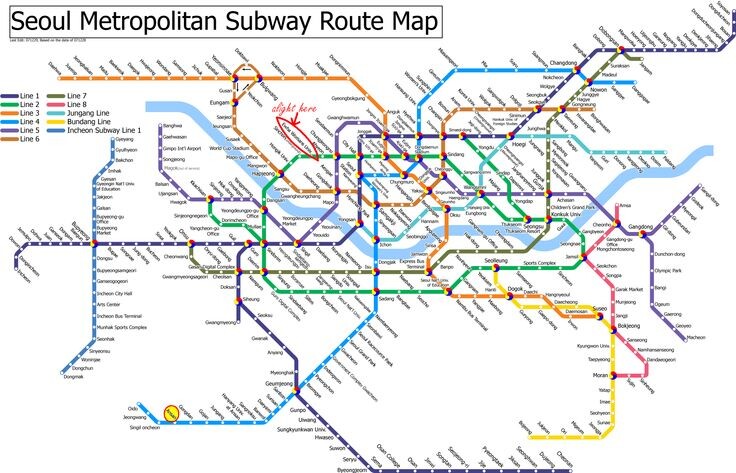
Routes Distinguished by Color: Each Seoul subway line is distinguished by its unique color. For example, Line 1 is dark blue, Line 2 is green, Line 3 is orange, Line 4 is blue, etc. Remembering these colors makes it easy to find the route you want.
Stations Indicated by Numbers and Letters: Each station is indicated by a unique number and name. For example, ‘234’ means the 34th station on Line 2. Transfer stations show overlapping colors of multiple lines.
Importance of Transfer Stations: Transfer stations are important points where you can switch to other lines. Places where multiple colors meet on the route map are transfer stations. When transferring, you must follow the transfer passage guidance well.
Finding Optimal Routes Using Smartphone Apps
These days, using smartphone apps makes it much more convenient to understand routes and find paths.
Kakao Map, Naver Map: These apps provide not only Seoul subway route maps but also real-time train locations, estimated travel times, and optimal transfer routes. When you enter your departure and arrival points, they recommend the fastest route or the route with the fewest transfers.
Subway-Specific Apps: Subway-specific apps like ‘Subway Boss’ are also useful. They often provide real-time operation information, detailed station information, and information about nearby convenience facilities.
App Usage Tips:
- Setting Departure/Arrival Stations: It’s important to enter accurate departure and arrival points.
- Selecting Route Options: Find the optimal route by selecting desired options such as ‘fastest route,’ ‘fewest transfers,’ or ‘least walking.’
- Checking Real-Time Information: You can predict train arrival times and move efficiently through real-time train location information provided by apps.
3. Fare Payment Methods: Transportation Card vs. Single-Journey Ticket
There are two main ways to pay Seoul subway fares.
1. Transportation Card (Rechargeable Card)
Most Common Method: Most Seoul citizens and visitors use transportation cards. You can use prepaid rechargeable transportation cards such as T-money and Cashbee.
Recharge at Convenience Stores, Subway Stations: You can recharge cards with cash at convenience stores or charging machines inside subway stations.
Transfer Discount Benefits: Using transportation cards allows you to receive transfer discount benefits between buses and subways (when transferring within certain time and distance limits).
Reissuance and Balance Management: If you lose your card, it’s difficult to get your balance back for unregistered prepaid cards. It’s good to use important cards after registering them.
2. Single-Journey Ticket
Convenient for Short-Term Users: You can purchase single-journey tickets if you use the Seoul subway occasionally or find recharging transportation cards cumbersome.
Purchase at Vending Machines: You can purchase at single-journey transportation card vending machines installed inside subway stations. When you select your destination station, the fare is displayed.
Deposit Refund: Single-journey tickets include a 500 won deposit. After arriving at your destination station, you can get your deposit back by inserting the ticket into the deposit refund machine next to the ticket gate.
Single-Journey Ticket Refund Method: Learn in Detail
Single-journey ticket refunds are simpler than you think, but first-time users may find them confusing.
Arrive at Destination Station: Arrive at your destination station on the subway you boarded with a single-journey ticket.
Find the Deposit Refund Machine: Before passing through the ticket gate, look for a machine labeled ‘Deposit Refund.’ It’s usually located next to the ticket gate or near the customer service center.
Insert Ticket: Insert your single-journey ticket into the refund machine.
Deposit Return: The machine returns the 500 won deposit. It comes out as coins, so you can use it right away.
Precautions:
- Refundable Time: Generally, deposits for single-journey tickets are refunded only on the same day. It’s best to get a refund by the next day at the latest.
- Non-Refundable Cases: If the ticket is damaged or lost, you cannot get your deposit back.
- Cannot Refund After Passing Ticket Gate: You cannot get your deposit back after passing through the ticket gate. Be sure to get a refund before passing through the ticket gate.
4. Seoul Subway Usage Tips: Utilizing Hidden Information
Now that you know the basic usage methods, let me share some tips for using the subway more conveniently and smartly.
1. Making Transfers Easier and Faster
Follow Transfer Guide Signs: At transfer stations, transfer guide signs for each line are well-marked. Following the line colors like green, orange, etc., makes transfers easy.
Check Transfer Distance: Some stations have long transfer distances (e.g., Euljiro 3-ga Station, Sindorim Station, etc.). It’s good to estimate transfer time in advance using apps and move with time to spare.
Same-Direction Transfers: At some stations, when transferring to another line going in the same direction, you can move on the same level without exiting the ticket gate (e.g., Gangnam Station Line 2 → Line 9).
Check Transfer Station Information in Advance: Checking transfer station structure or transfer passage information in apps in advance can reduce time spent wandering.
2. Reducing Congestion
Avoid Crowded Hours: Trains are very crowded during rush hours (7-9 AM, 5-7 PM). If possible, it’s better to use them outside these hours.
Check Car-by-Car Congestion: Some trains have systems that display congestion levels by car. Try selecting relatively less crowded cars through apps or in-train guidance.
Use End Cars: End cars tend to be relatively less crowded.
3. Utilizing Convenience Facilities
Elevators and Escalators: Elevators and escalators are installed for wheelchair users, stroller users, and people with mobility difficulties. You can get help by inquiring at the station office.
Lockers: When traveling around Seoul for a long time or when you have a lot of luggage, it’s convenient to use lockers inside subway stations (paid).
Restrooms: Most subway stations have restrooms.
Wi-Fi Zones: Major stations have areas providing free Wi-Fi.
4. Other Useful Tips
Use Subway Apps: As mentioned earlier, subway apps providing real-time operation information, directions, and transfer information are essential.
Check In-Station Convenience Facilities: Inside subway stations, there are various convenience facilities such as convenience stores, cafes, and pharmacies. If you urgently need something, you can solve it inside the station.
Lost and Found Center: If you lose something on the subway, you can inquire at each line’s lost and found center or report through the Seoul Metro website (items found inside trains are usually delivered to that line’s lost and found center, and items found inside stations are delivered to the station office).
Disabled Call Taxi and Transportation Services for the Mobility Impaired: Disabled call taxis or support services for the mobility impaired are also operated, so inquire if needed.
5. Using Seoul Subway Safely
Safety is as important as convenience. Please remember a few safety rules.
Use Safety Doors (Screen Doors): Most subway platforms have safety doors installed. Safety doors open when trains arrive and close again when trains depart. Be careful not to arbitrarily open or cross over safety doors.
Manage Belongings on Trains: During crowded hours, be careful of crimes such as pickpocketing. Wear your bag in front and take good care of valuables.
Dealing with Emergency Situations: If an emergency occurs on the train, don’t panic and use the emergency intercom to notify the crew. Be careful not to press emergency buttons carelessly.
Refrain from Drinking and Eating: Excessive drinking or consuming strongly scented food on trains can inconvenience other passengers. It’s better to refrain as much as possible (legally prohibited on some lines).
Conclusion: Seoul Subway Will Now Be Your Reliable Feet!
The Seoul subway is more than just a means of transportation; it’s an important infrastructure that’s part of Seoul citizens’ lives. If you utilize well the subway riding methods, route reading methods, single-journey ticket refund methods, and various tips shared today, using the Seoul subway will become much easier and more convenient.
Smartphone Apps are Essential: Be sure to install and use subway apps for finding directions and checking real-time information.
Make Transportation Card Usage a Habit: We recommend using transportation cards for transfer discount benefits and convenience.
Observe Safety Rules: Always use the subway with safety as the top priority.
Now don’t be afraid of the Seoul subway! We hope this article becomes a reliable guide for your Seoul life and travel.
EXTERNAL_LINKS: