Korea’s Pride, Samgyeopsal: An Introduction
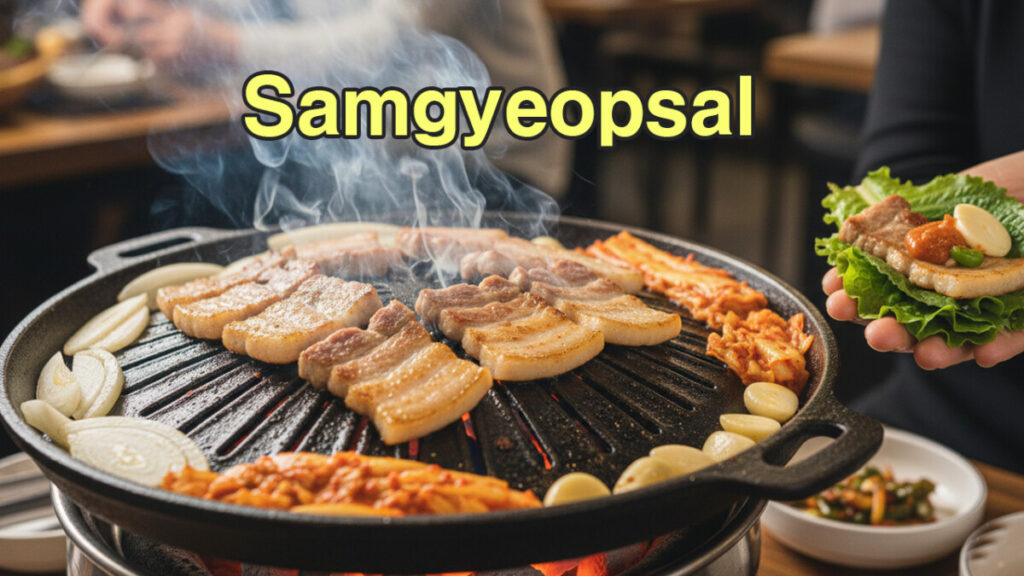
When visiting Korea, one of the first menu items that comes to mind is samgyeopsal. The flavor of pork with crispy outside and moist inside, the sizzling sound as it cooks, and the joy of eating it with various wrap vegetables. Samgyeopsal is a special existence that contains Korean life and culture beyond being simple food.
But how can we properly convey its charm and present the best experience when introducing samgyeopsal for the first time? Simply saying “it’s delicious” is not enough. In this article, we’ll dig into everything about samgyeopsal, from how to introduce it, to the most delicious way to enjoy it, and even the health benefits of vegetable wraps.
What is the Source of Samgyeopsal’s Charm?
The greatest charm of samgyeopsal is undoubtedly its rich juices and savory taste. Samgyeopsal, corresponding to the pork belly area, has layers of fat and lean meat, so when grilled, the savoriness and moistness that spreads throughout the mouth is excellent. Cut to a thick thickness, the chewing texture is also excellent, and the sizzling sound and smell as it cooks over charcoal or a grill stimulates not only taste but also smell, whetting the appetite.
Additionally, Korea’s samgyeopsal culture cannot leave out the joy of enjoying it together. The process itself of sitting around together, grilling meat, and wrapping ssam according to one’s preference is an enjoyable experience. This time of sharing delicious food while blooming conversations is an important element that makes you feel Korea’s jeong (affection).
The First Step to Introducing Samgyeopsal
When introducing samgyeopsal for the first time, it’s good to point out a few things.
- “Korean Pork Belly BBQ”: The most intuitive explanation. “Pork Belly” is a familiar cut even abroad, and “BBQ” clarifies that it’s grilled Korean-style.
- “Sizzle and Flavor”: Emphasizes the “sizzle” sound when samgyeopsal is grilled and the savory flavor that spreads throughout the mouth.
- “Customizable Flavor with Vegetables and Sauces”: Appeals that you can adjust to your taste through various side dishes such as wrap vegetables, garlic, kimchi, and ssamjang. This can reduce resistance to unfamiliar tastes.
- “Communal Dining Experience”: Explains Korea’s unique dining culture of sitting around together, grilling meat, and sharing it.
Tip: If possible, it’s also a good method to explain by comparing to other meat dishes or barbecue styles you might enjoy. For example, you could explain like “It’s like a richer, more flavorful version of bacon, but you grill it at the table!”
How to Enjoy Samgyeopsal Most Deliciously: Step-by-Step Guide
Eating samgyeopsal deliciously requires technique beyond simply grilling meat. You can maximize the flavor by utilizing a few tips.
1. Choosing Optimal Thickness and Freshness
- Thickness: Generally, samgyeopsal with 0.7cm to 1cm thickness is most delicious. If too thin, juices easily escape, and if too thick, it can be difficult to cook through.
- Freshness: Fresh samgyeopsal has a bright red color, and the fat has a milky white color. When touched, it should be elastic and have no smell.
2. Grill Preheating and Temperature Control
- Preheating: It’s important to sufficiently preheat the grill. If you put meat on an unheated grill, only the outside burns while the inside doesn’t cook, or it may stick to the grill.
- Temperature: Start with medium heat, place the meat, and when fat starts to melt, gradually reduce the heat while cooking slowly. Too high heat can burn the meat, so be careful.
3. Grilling Order and Timing
- Start with Fat Layer: It’s good to place the fatty parts of samgyeopsal on the grill first to melt the fat and release oil. This oil helps cook other lean meat parts, making them more moist.
- Don’t Flip Too Often: If you flip meat too often, juices escape and it becomes dry. When one side is nicely browned, flip to cook the other side, then flip again to cook the fatty parts.
- Using Scissors: When the meat is somewhat cooked, cut it into bite-size pieces with scissors. Placing cut surfaces on the grill can create a crispier texture.
4. Optimal Cooking Level: Golden Brown
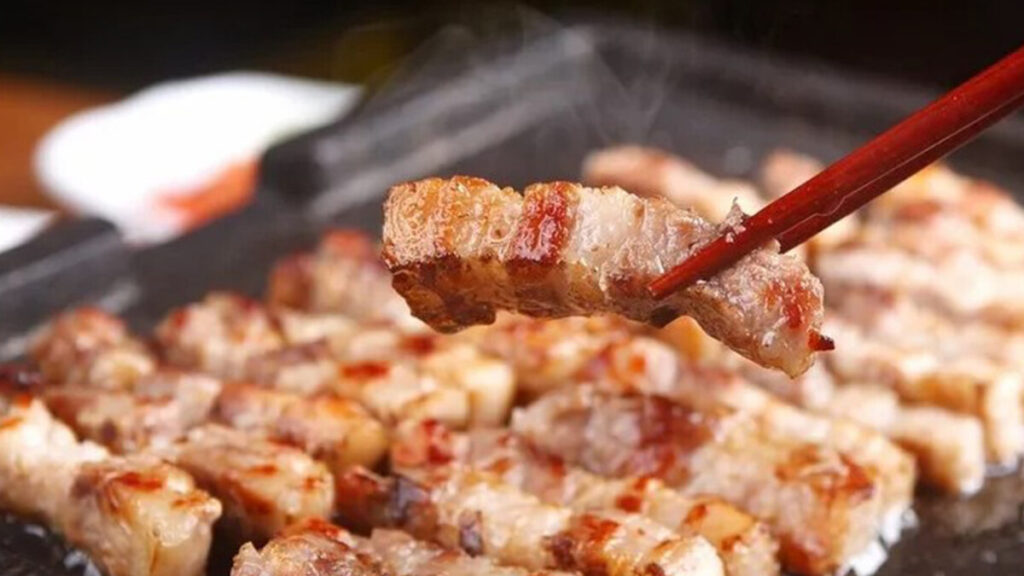
Samgyeopsal is most delicious when the outside is nicely browned and the inside is moist. If overcooked, it becomes dry, and if undercooked, it can have an unpleasant smell. Generally, the “Golden Brown” state, when cooked to a golden brown color, is most ideal.
Tip: In Korea, people also enjoy dipping it in meljeot (anchovy fish sauce). Meljeot captures the fatty taste of samgyeopsal and adds rich flavor. It’s good to introduce meljeot and encourage trying it according to taste.
The Magic of Vegetable Wraps: Perfect Harmony Adding Health and Flavor
The secret to properly enjoying samgyeopsal’s flavor while maintaining health lies in vegetable wraps. Creating your own wrap using fresh vegetables and various side ingredients is the highlight of a samgyeopsal meal.
1. Importance of Fresh Wrap Vegetables
- Lettuce: Captures the fatty taste of samgyeopsal with crisp texture and slightly bitter taste.
- Perilla Leaves: Create a fantastic harmony with samgyeopsal through unique aroma and flavor.
- Cabbage: Sweet and refreshing taste reduces the greasiness of meat.
- Bok Choy: Attractive with crisp yet soft texture.
- Baby Cabbage: Excellent sweet and crisp taste, great for wraps.
Tip: Preparing various types of wrap vegetables for personal selection will make for a more enjoyable experience.
2. Diverse Side Ingredients that Enhance Wrap Taste
- Garlic: Raw garlic’s pungent taste and aroma go well with meat, while grilled garlic becomes sweet and soft, presenting another charm.
- Peppers: Spicy Cheongyang peppers or crisp cucumber peppers add fresh flavor to wraps.
- Kimchi: Well-fermented kimchi captures the greasiness of samgyeopsal and adds spicy taste.
- Ssamjang: Ssamjang made by mixing doenjang, gochujang, garlic, sesame oil, etc., is essential for samgyeopsal wraps. Adds Korean-style rich flavor.
- Mustard Leaf Kimchi: Attractively pungent flavor surprisingly goes well with samgyeopsal.
- Pickled Vegetables: Sweet and sour pickles like pickled garlic stems and pickled peppers stimulate appetite.
3. Making Your Own Samgyeopsal Wrap: Recipes for Beginners
Here are some recommended wrap combinations:
- Basic Wrap: On lettuce, one piece of samgyeopsal, ssamjang, garlic slice. Can enjoy the most basic taste.
- Flavor-Rich Wrap: On perilla leaf, samgyeopsal, ssamjang, minced garlic, finely chopped pepper, well-fermented kimchi. Perilla leaf’s aroma and kimchi’s spiciness combine to present complex taste.
- Light & Clean Wrap: On baby cabbage, samgyeopsal, a little ssamjang, grilled garlic. Garlic’s sweetness and cabbage’s refreshingness gently wrap samgyeopsal’s taste.
- Spicy & Fresh Wrap: On lettuce, samgyeopsal, ssamjang, mustard leaf kimchi, finely chopped pepper. Mustard leaf kimchi’s unique flavor and pepper’s spiciness capture greasiness.
Tip: When wrapping ssam, it’s important not to be too greedy and add an appropriate amount of ingredients. If too large, it’s difficult to put in your mouth and the harmony of tastes can be broken.
Health Benefits of Samgyeopsal and Vegetable Wraps
Although samgyeopsal has high fat content, when consumed with fresh vegetables, you can obtain several health benefits.
1. Enhanced Dietary Fiber and Vitamin Intake
Various wrap vegetables contain abundant dietary fiber, vitamins A, C, K, folate, etc. These nutrients can help digestion, strengthen immunity, and help prevent aging through antioxidant action. Since vegetables neutralize the fatty taste of samgyeopsal, there’s also the effect of consuming larger amounts of vegetables.
2. Help Controlling Cholesterol Levels
Some wrap vegetables, especially perilla leaves or lettuce, contain components that can help lower cholesterol levels. Also, vegetable dietary fiber can contribute to suppressing cholesterol absorption in the body.
3. Antioxidant Component Intake
Side ingredients like garlic, peppers, and kimchi are rich in antioxidant components. Garlic’s allicin, pepper’s capsaicin, kimchi’s probiotics, etc., can help enhance immunity and prevent cell damage.
Precaution: Of course, you shouldn’t overlook that samgyeopsal itself is high-fat, high-calorie food. Even when consumed with vegetable wraps, it’s good to avoid overeating. Grilling rather than frying or stir-frying is relatively healthier, and eating with wrap vegetables helps neutralize the fatty taste and prevent overeating.
Common Mistakes and Precautions
Knowing a few mistakes and precautions that can occur when enjoying samgyeopsal can create a more enjoyable dining experience.
- Grilling on Too High Heat: Meat can burn or only the outside cooks while the inside doesn’t.
- Flipping Meat Too Often: Juices escape and it becomes dry.
- Wrapping Ssam Too Large: Uncomfortable to put in mouth and difficult to taste the ingredients’ original flavors.
- Lack of Consideration for Spicy Food: If you can’t eat spicy food well, it’s good to prepare spicy side ingredients separately or adjust the amount.
- Strong Taste of Ssamjang or Fish Sauce: Ssamjang or fish sauce has strong Korean taste, so it’s good to recommend using only a small amount at first.
Conclusion
Korea’s representative menu item, samgyeopsal, is an excellent choice that can present an unforgettable culinary experience. Beyond simply delicious meat, you can also share the enjoyable culture of grilling together and wrapping ssam.
If you consider the methods for enjoying samgyeopsal deliciously, various vegetable wrap combinations, and even health benefits introduced in this article, you’ll fall deeply into the diverse charms of Korean samgyeopsal.
Prepare samgyeopsal right now and experience the unforgettable taste of Korea!
- Prepare various wrap vegetables and side ingredients to encourage creating your own wrap.
- Focus on not burning meat on too high heat, and cooking appropriately to preserve juices.
- When wrapping ssam, guide to not make it too large and feel the harmony of various ingredients.