🌶️ Jjamppong and Jjajangmyeon: Korean Soul Food and the Essence of Korean-Chinese Cuisine
When visiting Korea, among countless food choices from street food to fine dining restaurants, jjamppong and jjajangmyeon are absolutely essential. These two menu items are soul food deeply embedded in Korean life beyond simple food, and are representative dishes showing the essence of Korean-Chinese cuisine.
But what exactly are jjamppong and jjajangmyeon? Simply calling them ‘spicy noodle soup’ and ‘black sauce noodles’ cannot capture their depth and charm. This article presents a perfect guide to help understand jjamppong and jjajangmyeon properly, and furthermore enjoy the diverse world of Korean-Chinese cuisine.
🍜 Jjamppong: Harmony of Spiciness and Refreshment, Containing the Flavor of the Sea
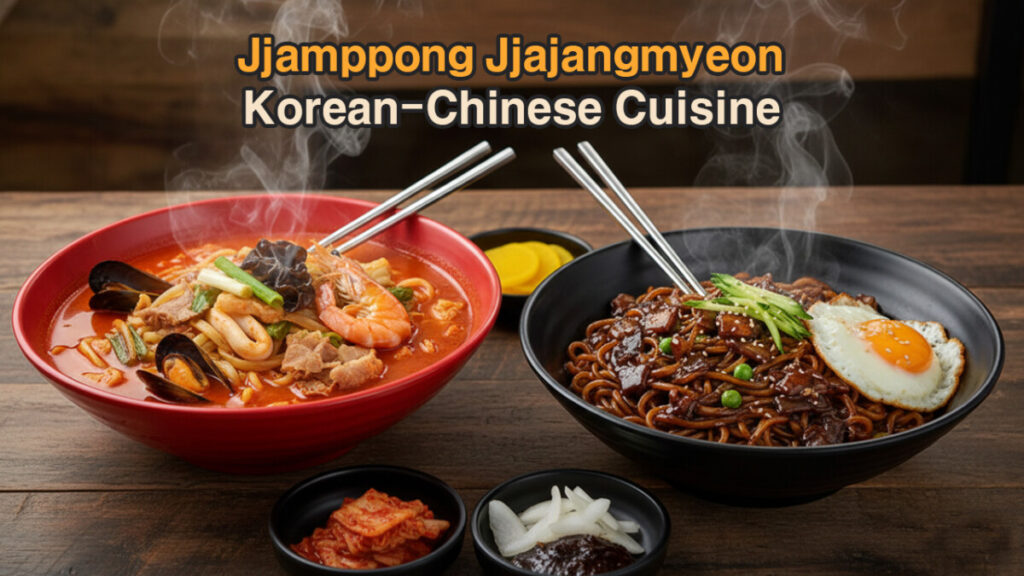
Jjamppong is one of the first menu items that comes to mind when thinking of Korean-Chinese cuisine. It boasts deep and rich flavor with various seafood and vegetables blended in spicy and hot broth. When understanding jjamppong, it’s important to appreciate this harmony of spiciness and refreshment, and the flavor of the sea.
Origin and Characteristics of Jjamppong:
- Origin: The theory that jjamppong originated from ‘chanpon’ in China’s Shandong region is influential. After coming to Korea and changing to suit Korean tastes, today’s spicy jjamppong was born. The name ‘jjamppong’ itself contains the meaning of mixing various ingredients.
- Main Ingredients: Fresh seafood (squid, shrimp, mussels, etc.), pork, and various vegetables (onions, cabbage, carrots, mushrooms, etc.) are generously included.
- Broth: Made by stir-frying with chili oil and various spices, then adding broth extracted from seafood and vegetables. Characterized by spicy yet deep and refreshing taste.
- Noodles: Usually uses chewy wheat noodles that blend well with the broth.
Understanding Jjamppong:
- Spicy Seafood Noodle Soup is an intuitive description. It clearly conveys that it’s a broth dish with spicy taste and seafood.
- “It’s like a Korean take on a seafood noodle soup, but with a spicy kick!” – Korean spicy flavor is added to a familiar food.
- Spice Level Adjustment: It’s good to know about less spicy jjamppong (mild jjamppong) or regular jjamppong based on spice preferences. Many Chinese restaurants have separate ‘mild jjamppong’ menu items.
- Emphasizing Ingredient Freshness: The core of jjamppong’s taste is fresh seafood and broth. “The seafood is super fresh and the broth is made from scratch, giving it a really deep flavor.”
- Various Types: Besides regular jjamppong, there are various types such as ‘white jjamppong (baek-jjamppong)’ with white broth, ‘chadol jjamppong’ with meat instead of seafood, and ‘direct-fire jjamppong.’
How to Enjoy Jjamppong Deliciously:
- Harmony of Noodles and Broth: While it’s delicious to fish out and eat noodles, eating the remaining broth with a spoon after finishing noodles is a delicacy.
- Pickled Radish and Kimchi: Sweet and sour pickled radish and spicy kimchi are essential for Korean-Chinese cuisine. They capture jjamppong’s oily taste and add flavor.
- Adding Rice Bowl: In Korea, ‘jjamppong-bap’ where rice is mixed in jjamppong broth is also popular. Good for those wanting a hearty meal.
⚫ Jjajangmyeon: Sweet and Salty Charm, National Menu Loved by All
Jjajangmyeon is a noodle dish flavored with black sauce called chunjang, characterized by unique flavor that is sweet yet salty. With different charm from jjamppong, it can be called a national menu that all Koreans love. It’s commonly described as “Black bean noodles” or “Korean black noodles.”
Origin and Characteristics of Jjajangmyeon:
- Origin: Jjajangmyeon also originated from ‘zajiangmian (炸醬麵)’ in China’s Shandong region. After entering Korea, it went through changes such as adding sugar and adjusting chunjang’s salty taste to suit Korean tastes, becoming today’s jjajangmyeon.
- Main Ingredients: Jjajang sauce made by stir-frying pork, onions, potatoes, zucchini, etc., with chunjang is the core.
- Sauce: Chunjang is stir-fried in oil to remove chunjang’s unique bitter taste and bring out savory flavor. Sugar, soy sauce, oyster sauce, etc., are added to create sweet and salty taste.
- Noodles: Often uses noodles slightly thicker and chewier than jjamppong noodles.
Understanding Jjajangmyeon:
- “It’s noodles with a savory, slightly sweet black bean sauce.” This clearly conveys the taste and color of jjajang sauce.
- “It’s not spicy at all, so it’s great for everyone!” Emphasizing that it’s not spicy makes it a good choice for those who can’t eat spicy food well.
- “The sauce is made from fermented black beans, stir-fried with pork and vegetables.” Providing information about ingredients increases understanding of the food.
- “It’s a comfort food, like spaghetti for Italians or ramen for Japanese.” Using analogies helps understand jjajangmyeon’s status more easily.
- ‘Jjajang Rice’ Option: Besides jjajangmyeon, there’s ‘jjajang-bap’ where jjajang sauce is placed on rice and mixed. This can be a good alternative for those who prefer rice over noodles.
How to Enjoy Jjajangmyeon Deliciously:
- Mix Evenly: You must mix noodles and sauce well with chopsticks to feel jjajangmyeon’s true taste.
- Slight Red Pepper Powder: Sprinkling red pepper powder slightly on jjajangmyeon captures greasiness and adds rich flavor.
- With Pickled Radish and Kimchi: Like jjamppong, pickled radish and kimchi make jjajangmyeon’s taste even richer.
🥢 Endless Charm of Korean-Chinese Cuisine
Besides jjamppong and jjajangmyeon, there are endless attractive Korean-Chinese dishes worth discovering. Korean-Chinese cuisine has unique charm containing Korean taste and emotions, different from mainland Chinese cuisine.
Tangsuyuk: Different Charm from Guobaorou, Capturing Korean Tastes
Tangsuyuk is one of the representative players of Korean-Chinese cuisine. It’s a dish of fried pork eaten with sweet and sour sauce, with excellent texture that’s crispy outside and moist inside.
- Characteristics: Characterized by being crispy outside by coating with glutinous rice or starch powder before frying. The sauce is made sweet and sour by adding fruits (pineapple, apple, etc.) and vegetables (onions, carrots, cucumbers, etc.).
- Description: “It’s like sweet and sour fried pork. The sauce is tangy and slightly sweet, and the pork is crispy on the outside and tender inside.”
- Dipping vs Pouring: In Korea, tastes are divided into ‘jjikmuk’ (dipping) where tangsuyuk sauce is dipped, and ‘bumuk’ (pouring) where it’s poured. You can ask about preferences and serve accordingly, or request sauce separately.
Kkanpunggi, Lajogi: Feast of Spicy Flavor
Kkanpunggi and lajogi are good menu items to recommend to those who like spicy taste. They’re dishes of fried chicken tossed in spicy sauce, characterized by addictive taste.
- Kkanpunggi: A dish of fried chicken tossed in sweet and spicy sauce based on garlic, peppers, soy sauce, etc.
- Lajogi: Similar to kkanpunggi, but adds chunjang and chili oil for deeper and spicier taste.
- Description: “These are spicy stir-fried chicken dishes. They have a nice kick from the chili peppers and a savory flavor.”
Fried Rice & Fried Dumplings: Harmony of Heartiness and Crispiness
Fried rice and fried dumplings that go well with jjamppong and jjajangmyeon cannot be left out.
- Fried Rice: Rice stir-fried with eggs, vegetables, meat, etc., a light and hearty menu.
- Fried Dumplings: Dumplings with full filling crisply fried, also popular as beer snacks.
- Description: “Fried rice is a staple, and fried dumplings are crispy and delicious. They go well with noodles or on their own.”
💡 Creating an Enjoyable Korean-Chinese Cuisine Experience
Experiencing Korean-Chinese cuisine is more than simply tasting food – it can be a precious experience of sharing Korean culture and emotions.
Menu Selection Guide
- For First-Timers: We recommend the jjamppong, jjajangmyeon, and tangsuyuk combination. You can experience the most popular and Korean tastes.
- Prefer Spicy Flavor: Try ordering jjamppong, kkanpunggi, and lajogi together.
- Prefer Light Flavor: Choosing jjajangmyeon, fried rice, and tangsuyuk (sauce separately) is good.
- Want to Taste Various Items: It’s good to experience the ‘dish-sharing’ culture of ordering various menu items in small portions to share.
Ordering Tips
- Showing the Menu: Showing a menu with pictures or adding explanations about menu items helps with selection.
- Asking for Recommendations: Asking the Chinese restaurant owner or staff for recommended menu items is also a good method.
- Portion Control: Since portions tend to be large, be careful not to order too much at first.
Dining Etiquette and Culture
- Chopstick Use: For those not familiar with chopstick use, you can request forks or spoons.
- Individual Side Plates: When ordering various dishes, it’s common to serve portions on individual side plates.
- Expression of Gratitude: Expressing that you enjoyed the meal is always welcomed.
🚀 Conclusion: Jjamppong and Jjajangmyeon, Spreading Korean-Chinese Cuisine’s Charm to the World
Jjamppong and jjajangmyeon are foods deeply embedded in Korean daily life, and their taste and culture can be sufficiently attractive to anyone. Using the explanations and tips about jjamppong, jjajangmyeon, and various Korean-Chinese cuisines introduced today, you can have an unforgettable culinary experience.
Try It Right Now!
- Look at pictures of jjamppong and jjajangmyeon and see which menu is more appealing.
- Visit a nearby Chinese restaurant and order jjamppong, jjajangmyeon, and tangsuyuk.
- Enjoy a pleasant meal while understanding the characteristics and taste of each menu.
We hope this article becomes an excellent guide to discovering Korean flavors. Create richer memories through the diverse charm of Korean-Chinese cuisine!