
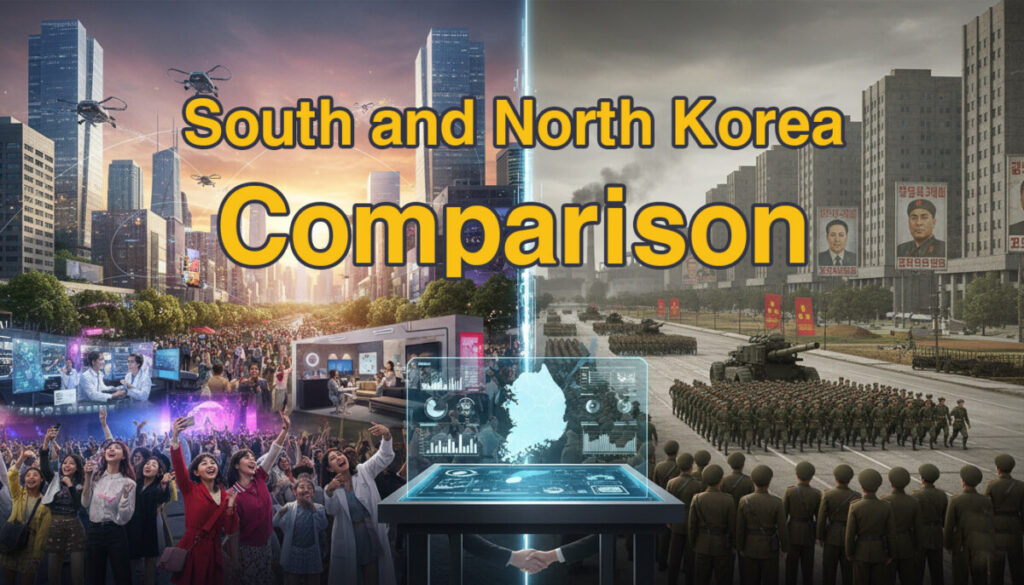
2025 South and North Korea: Comparative Analysis Amid Winds of Change
In 2025, the situation surrounding the Korean Peninsula continues to change constantly. Amid these changes, North and South Korea are walking different paths and developing. Comparative analysis of the two countries in various aspects such as economic power, diplomatic power, political level, and military power is very important for understanding the present of the Korean Peninsula and predicting the future. In this article, we aim to objectively examine the current status of South and North Korea as of 2025 and discuss future prospects.
South-North Korea Economic Power Comparison: Growth Drivers and Challenges
In 2025, the biggest difference in South-North Korean economies stems from scale and structure. The Republic of Korea is a top 10 economic powerhouse in the world, boasting a diversified industrial structure including high-tech industries, manufacturing, and service industries. On the other hand, North Korea concentrates on resource development and some manufacturing under a planned economy system, but is greatly constrained in economic growth due to international sanctions.
South Korea’s Economic Strengths:
- Technological Innovation: Possesses global competitiveness in high-tech fields such as semiconductors, artificial intelligence, and biotechnology.
- Export-Oriented Economy: Drives economic growth by conducting active export activities targeting the world market.
- Stable Financial System: A well-established financial system becomes the foundation for promoting investment and consumption.
North Korea’s Economic Challenges:
- International Sanctions: Strong economic sanctions from the international community due to nuclear and missile programs are holding back the North Korean economy.
- Outdated Infrastructure: Lack of social infrastructure such as electricity and transportation causes difficulties in improving productivity.
- Limitations of Self-Sufficient Economy: Limited exchange with the outside world causes difficulties in introducing advanced technology or expanding markets.
Even in 2025, this economic gap will be difficult to narrow easily. However, depending on the improvement of South-North relations or support from the international community, the possibility of some changes in the North Korean economy cannot be ruled out.
Diplomatic Power Comparison: Status and Strategy on the International Stage
In 2025, South and North Korea’s diplomatic power shows different strengths and weaknesses. The Republic of Korea plays a pivotal role in the international community by maintaining close relationships with major powers such as the United States, China, and Japan based on democratic values and market economy. North Korea is attracting international attention through nuclear weapons development, but at the same time is pursuing a diplomatic strategy that deepens isolation.
South Korea’s Diplomatic Strengths:
- Alliance Relations: Strengthens security and economic cooperation based on a solid alliance with the United States.
- Multilateral Diplomacy: Conducts active activities in international organizations such as the UN and WTO, contributing to solving global issues.
- Soft Power: Expanding global influence through cultural content such as K-Pop and K-Drama.
North Korea’s Diplomatic Characteristics:
- Status as Nuclear Weapons State: Adheres to a strategy of using nuclear weapons as a diplomatic negotiation card.
- Relations with China: Dependence on China is increasing amid economic difficulties.
- Limited Diplomatic Channels: Focuses on exchanges with limited countries rather than improving relations with Western countries.
In 2025, South Korea is expected to perform more responsible roles in the international community and demonstrate leadership. On the other hand, North Korea will continue efforts to escape isolation on the international stage while facing difficult tasks of resolving nuclear issues and improving relations with the international community.
Political Level Comparison: Differences Between Democratic and Authoritarian Systems
In 2025, the political systems of South and North Korea show fundamental differences. The Republic of Korea maintains a stable political system based on separation of powers under a liberal democratic system where national sovereignty is guaranteed. North Korea is an authoritarian state with a one-person rule system centered on Kim Jong-un, with restrictions on political freedom and human rights.
South Korea’s Political Characteristics:
- National Sovereignty: Citizens directly elect leaders through elections and participate in policy decisions.
- Rule of Law: The state operates according to the constitution and laws, and all powers are exercised within the framework of law.
- Multi-Party System: Various political parties compete and represent the voices of the people.
North Korea’s Political Characteristics:
- One-Person Rule System: Chairman Kim Jong-un holds all power as the supreme leader.
- Korean Workers’ Party Centered: All political and social activities are conducted under the control of the Korean Workers’ Party.
- Limited Political Participation: Political freedom of residents is extremely limited, and criticism of the system is strictly prohibited.
Even in 2025, this fundamental difference in political systems is expected to continue. South Korea will continue efforts for democratic development, while North Korea will focus on maintaining the current system and strengthening internal unity.
Military Power Comparison: Advanced Weapons Systems and Nuclear Capabilities
In 2025, the biggest difference in South-North Korean military power is nuclear possession and the development level of advanced weapons systems. The Republic of Korea continues to develop advanced conventional weapons systems based on a combined defense posture with the U.S. military. North Korea is heightening military threats by focusing on nuclear weapons and ballistic missile development.
South Korea’s Military Power Characteristics:
- Advanced Conventional Weapons: Possesses world-class conventional weapons systems such as F-35 fighters, latest destroyers, and K-9 self-propelled howitzers.
- Combined Defense with U.S. Forces: Responds to North Korean military threats through a strong combined defense posture.
- Defense Science and Technology Development: Promotes military modernization through independent defense science and technology research and development.
North Korea’s Military Power Characteristics:
- Nuclear Weapons and Missiles: Has made significant progress in nuclear weapons miniaturization and ballistic missile technology development.
- Large-Scale Forces: Possesses one of the world’s largest military forces, and conventional forces such as long-range artillery are also substantial.
- Asymmetric Forces: Also strives to strengthen asymmetric forces such as cyber attacks and special operations forces.
In 2025, North Korea’s nuclear and missile threats will remain the biggest variable in Korean Peninsula security. The Republic of Korea will respond to North Korean threats through strengthening missile defense systems and introducing advanced weapons, while seeking to ease military tensions on the Korean Peninsula through diplomatic efforts.
Future Outlook: Possibilities of Cooperation and Conflict
In 2025, South and North Korea will show clear differences in all areas including economy, diplomacy, politics, and military. The Republic of Korea will further solidify its status as a developed country and expand its influence in the international community. North Korea is expected to agonize over the difficult tasks of resolving nuclear issues and improving relations with the international community.
Possibilities of Cooperation:
- Humanitarian Aid: Humanitarian aid for North Korea’s food shortages or health problems can continue.
- South-North Economic Cooperation: Some economic cooperation projects may resume depending on changes in political circumstances.
- Denuclearization Dialogue: Dialogue for peace settlement may resume depending on North Korea’s denuclearization will.
Possibilities of Conflict:
- North Korean Provocations: The possibility of North Korean military provocations such as nuclear and missile test launches remains.
- Political Tensions: Tense relations may continue due to political differences between South and North.
- Influence of International Situations: The interests of surrounding powers such as U.S.-China conflicts may affect South-North relations.
In 2025, the future of the Korean Peninsula is difficult to predict. However, what is clear is that it’s important for South and North Korea to understand and respect each other and continue efforts for peace and prosperity. We hope this article has helped somewhat in understanding the state of South and North Korea in 2025.
Conclusion
In 2025, South and North Korea will walk their own paths showing clear differences in various aspects such as economic power, diplomatic power, political level, and military power. While the Republic of Korea strengthens its status as a developed country and expands its influence in the international community, North Korea will continue efforts for survival and development amid international sanctions and internal challenges.
- South Korea: Will continue stable growth based on advanced technology and export-oriented economy, democratic political system, and combined defense posture with U.S. forces.
- North Korea: Will focus on nuclear and missile development, seek survival amid international sanctions, and try to maintain internal stability through relations with China.
- Korean Peninsula Future: The future of the Korean Peninsula will unfold amid unpredictable variables as South-North dialogue and cooperation, and the interests of surrounding powers work in complex ways.